
How Fast Can a Burst Pipe Damage Your Home?
Learn how quickly a burst pipe can damage your home and when immediate pipe repair can help prevent costly water damage.
How much damage can escaping water cause before you even find the source? A burst pipe can send water behind walls, beneath floors, and through ceilings within a short time. At first, you might only notice a wet spot or small puddle. However, water may already be spreading into areas you cannot see. As it travels, drywall, flooring, insulation, and nearby belongings can begin to absorb moisture.
That is why the first minutes and hours matter. The sooner you shut off the water, the less time it has to spread and soak surrounding materials. Once the flow stops, you can focus on finding the affected areas and determining how far the water has traveled. Prompt pipe repair can then address the plumbing failure before the damage spreads further and before you restore the water supply.
1. How Quickly a Burst Pipe Causes Damage
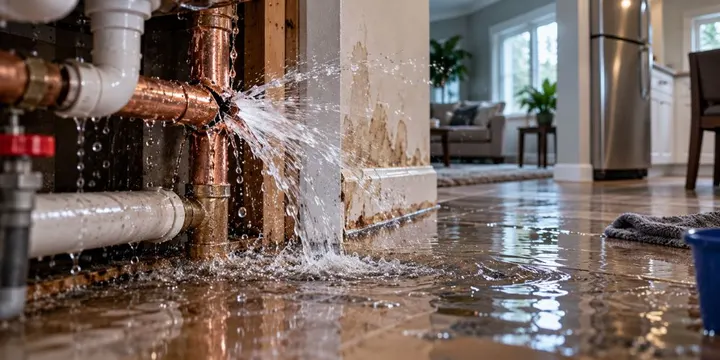
A burst pipe can cause significant water damage in several parts of a home in a short time. In the first minutes, water may spread across the flooring, soak the drywall, and move into adjoining rooms. Several factors influence how quickly the damage develops, such as:
- Location of the break: A burst pipe inside a wall, ceiling, or upper floor can send water into concealed spaces and rooms below.
- Size of the opening: A larger rupture allows more water to escape before the supply shuts off.
- Water pressure: Higher pressure can force water through a damaged pipe more quickly.
- Pipe diameter: Larger supply lines can release a greater volume of water than smaller lines.
- Response time: Shutting off the water promptly limits how long surrounding materials remain exposed.
Because each plumbing failure is different, the visible water does not always show the full extent of the problem. Quick action can reduce saturation and help limit the amount of restoration needed after a burst pipe.
2. What Happens in the First Few Hours
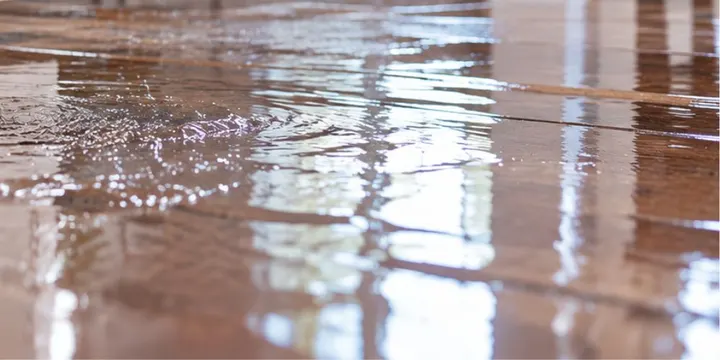
Within the first few hours, water from a burst pipe can spread quickly across exposed areas and begin interfering with normal use of the home. During this early stage, several immediate problems can appear as water spreads through the affected area, such as:
- Standing water: Water can collect across floors and spread into nearby rooms.
- Wet belongings: Furniture, rugs, boxes, and personal items may become soaked when they are near the affected area.
- Ceiling leaks: A broken pipe on an upper floor can send water through the ceiling below.
- Electrical hazards: Water reaching outlets, appliances, fixtures, or wiring can make affected areas unsafe.
Even when the visible damage appears limited, water may already be moving beyond the immediate area. Finding the source quickly helps a plumber assess the break and determine the necessary pipe repair.
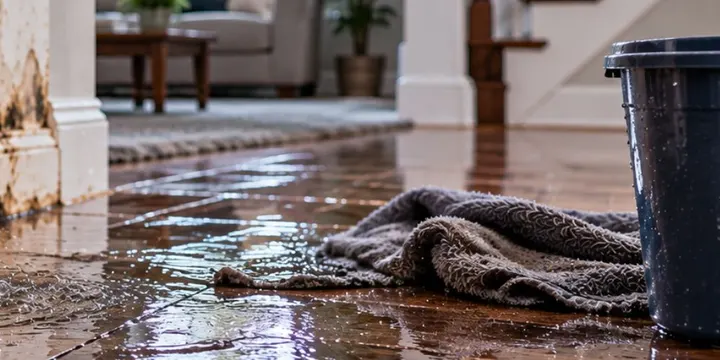
3. Damage That Develops After the Leak
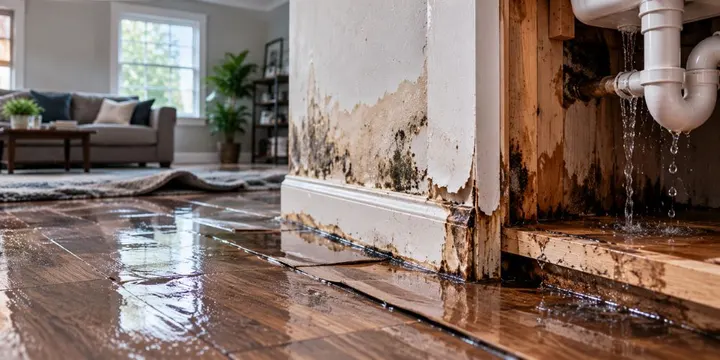
Even after the water stops flowing, absorbed moisture can continue affecting building materials. Problems may become more noticeable as wet materials remain damp, swell, weaken, or lose their original shape. As trapped moisture remains, the following types of damage may become more noticeable over time:
- Drywall deterioration: Saturated drywall may soften, sag, crumble, or require removal.
- Warped flooring: Wood, laminate, and other moisture-sensitive materials can swell, buckle, or separate.
- Damaged finishes: Paint, trim, adhesives, and coatings may peel, stain, or lose adhesion.
- Reduced insulation performance: Wet insulation may lose effectiveness, leaving enclosed spaces damp.
- Mold growth: Persistent moisture can create conditions that support mold growth if affected materials do not dry properly.
Moisture can also remain beneath flooring, behind walls, and around framing long after visible water disappears. This hidden damage is one reason a burst pipe requires attention beyond simply cleaning up the initial puddle.
4. Why Pipe Repair Should Not Wait
A damaged plumbing line requires prompt attention, even after turning off the main water supply. Otherwise, restoring water service without properly repairing the pipe may cause the leak to recur. Delays can also keep affected materials wet longer and increase the amount of material homeowners may need to dry, remove, or replace.
A proper repair involves more than closing the visible break. Plumbing professionals can also check for conditions that may have contributed to the failure, including:
- Corrosion: Deteriorated pipe walls may indicate that nearby sections have also weakened.
- Freezing damage: Frozen water can put pressure on multiple sections of the plumbing system.
- Weak fittings: Loose, cracked, or deteriorated connections can create additional failure points.
- Nearby pipe damage: Stress around the failed section may reveal cracks, deformation, or other signs of deterioration.
By identifying the cause before completing the pipe repair, professionals can address the failed section and determine whether nearby piping also requires attention.
5. What to Do Before Help Arrives
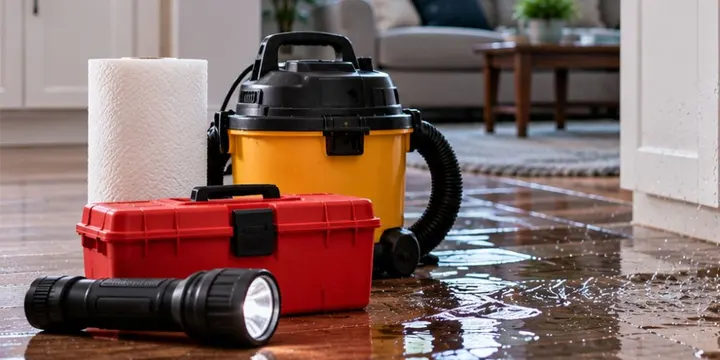
After discovering a burst pipe, homeowners must focus on stopping the water and reducing immediate safety risks. The following steps helps prevent the situation from becoming more difficult to manage:
- Shut off the main water supply: Closing the main valve stops additional water from feeding the damaged line.
- Avoid electrical hazards: Stay away from outlets, appliances, fixtures, and other electrical equipment that come into contact with water.
- Move belongings when safe: Relocate furniture, electronics, documents, and other items away from spreading water when doing so poses no risk.
- Contain accessible water: Use towels, buckets, or containers to help control minor water movement after shutting off the supply.
At the same time, avoid makeshift repairs that could hide the damaged area or interfere with the inspection. Also, do not restore the water supply until plumbing professionals assess the break and complete the required pipe repair.
6. What Happens During Professional Pipe Repair
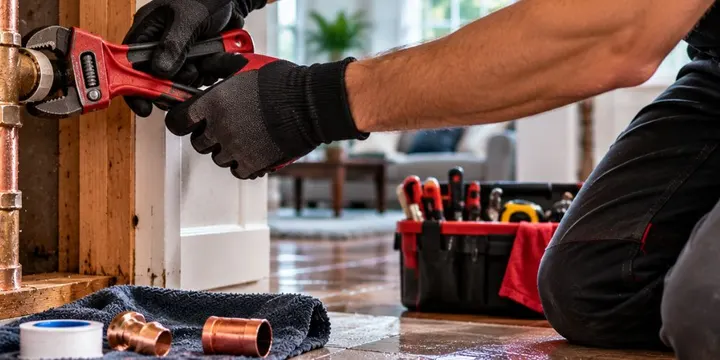
Professional pipe repair starts with identifying the exact point of failure and determining why the pipe broke. This process helps experts determine whether they can repair a limited section or if the damaged piping needs replacement. The process generally includes:
- Locate the failed section: Professionals access the damaged area and determine the extent of the break.
- Identify the cause: They check for freezing, corrosion, excessive pressure, weakened joints, or physical damage to the pipe.
- Inspect surrounding piping: Examine nearby sections for conditions that could lead to another failure.
- Repair or replace the damaged section: Experts select an appropriate method based on the pipe material, location, and extent of damage.
- Test the repaired line: Professionals check the plumbing for leaks and proper operation before restoring normal water service.
A complete pipe repair addresses both the immediate failure and the condition of the surrounding plumbing.

Stop the Flow Before Damage Spreads
A burst pipe may start as a single plumbing failure, but escaping water can quickly turn it into a problem affecting several areas of your home. Floors, walls, ceilings, and nearby materials can start absorbing water within minutes. So, once you spot the problem, shut off the water instead of waiting to see how far it spreads. Prompt pipe repair can stop continued water loss and address the damaged section. Take action now with a plumbing professional for burst pipe repair in Shannon, AL.
References:
- What to do if a pipe bursts and water is rapidly flooding your home (2026, July 18). PanicStation.org. Retrieved from https://panicstation.org/uk/a-pipe-bursts-and-water-is-rapidly-flooding-your-home/
- Jung, D., Kang, D., Liu, J., & Lansey, K. (2015). Improving the Rapidity of Responses to Pipe Burst in Water Distribution Systems: A Comparison of Statistical Process Control Methods. Journal of Hydroinformatics, 17(2), 307–328. Retrieved from https://doi.org/10.2166/hydro.2014.101
Keep Reading
Similar Posts


